Dec 17, 2025
AmpleMax Author
Tech Trends 2026: The 5 Forces Redefining Business Over the Next Decade
2026 marks a turning point.
Companies will stop experimenting with technology and begin integrating it structurally into their operations, business models, and long-term strategy.
Organizations that move early will gain a competitive edge that will be difficult to match in the years ahead.
In this article, we explore the five most transformative Tech Trends for 2026, grounded in the deepest shifts happening in technology today.
1️⃣ Embodied AI: Intelligence Moves Into the Physical World
For years, AI lived inside screens and servers. In 2026, it crosses a critical threshold:
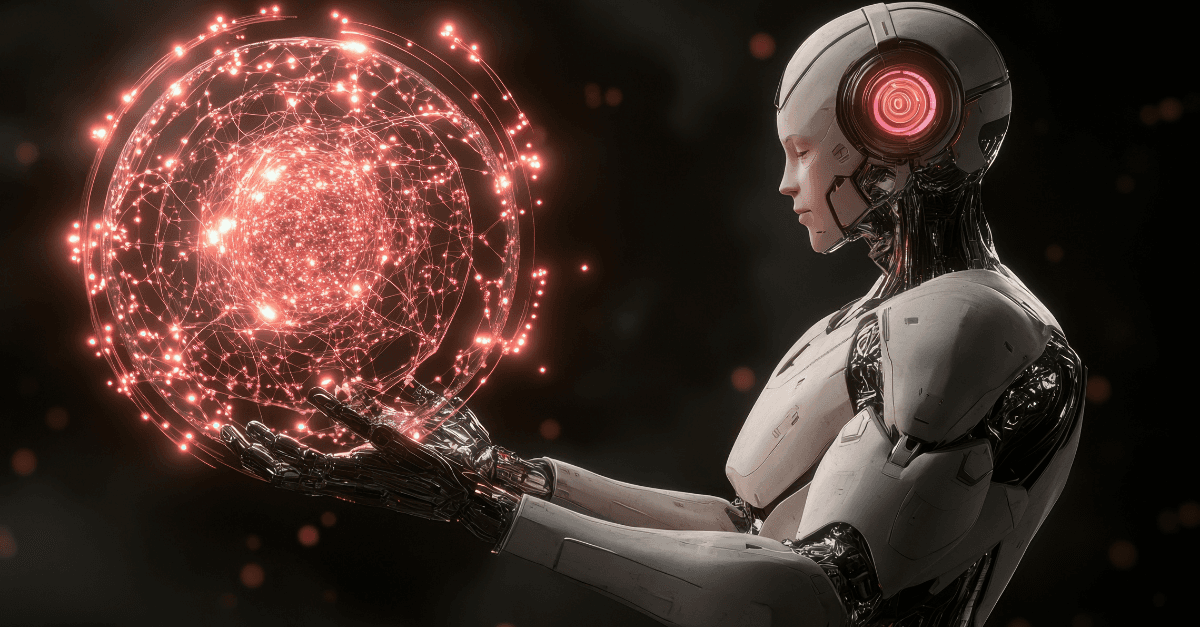
AI becomes a physical actor, powering robots, autonomous systems, and hardware capable of learning directly from the environment.
Why it matters
Automation expands beyond repetitive tasks to complex, adaptive physical processes.
Robots and devices can “perceive” and react in real time.
Major efficiency gains for logistics, manufacturing, retail, construction, and field services.
Lower operational costs through intelligent automation and sensor-driven decision-making.
Real-world examples
Intelligent warehouse robots collaborating with staff.
Autonomous vehicles performing internal logistics routes.
Automated inspections on job sites, factories, or retail floors.
Reinforcement-learning robots improving through physical interaction.
AI stops being just software—
it enters the real world.
2️⃣ Hybrid Workforce: Humans + Intelligent Agents
AI is no longer just a tool.
In 2026, it becomes an active member of the workforce, capable of planning tasks, executing end-to-end workflows, and collaborating with humans.
What’s changing
AI agents that coordinate tasks across teams.
Automatic report generation, scheduling, validation, reconciliation, and operational decisions.
Humans shift from doing the work to supervising, interpreting, and orchestrating it.
New roles focused on AI governance and oversight.
Key benefit
Organizations achieve significant productivity growth without expanding headcount, as AI handles operational processes autonomously.
Main challenge
The issue is no longer “adopting AI,” but deploying AI in production safely, at scale, and with real business impact.
3️⃣ Quantum Acceleration: The Beginning of the Quantum Decade
Quantum computing takes a meaningful leap in 2026—
moving from research labs into early enterprise use cases.
It does not replace classical computing yet, but it begins to transform data-heavy industries where traditional methods hit mathematical limits.
Where it shows impact
Massive optimization problems in logistics and supply chain.
Molecular simulation for pharmaceuticals and advanced materials.
Financial modeling, forecasting, and risk analysis.
Quantum machine learning for accelerated model training.
Post-quantum cryptography and long-term data protection.
Why companies must act now
Preparing for quantum means rethinking:
infrastructure, security, skills, partnerships, and pilot projects.
Those who wait will be years behind when true quantum advantage emerges.
4️⃣ AI-Powered Cybersecurity: Machine-Speed Defense
As organizations adopt more AI, attackers do too.
2026 introduces a new battleground where threats—powered by AI—move faster than human teams can respond.
This forces cybersecurity to evolve into systems that are autonomous, predictive, and continuously adaptive.
The new reality
Attacks are more sophisticated, automated, and personalized.
Human-only detection and response models are no longer viable.
AI becomes a real-time security layer that monitors, detects, and reacts at machine speed.
Defining characteristics
AI-driven anomaly and behavior detection.
Automated containment, isolation, and mitigation.
Continuous AI-based penetration simulations.
Predictive threat models analyzing future vulnerabilities.
Smart Zero-Trust environments governed by machine intelligence.
Outcome
A cybersecurity model capable of anticipating, neutralizing, and learning from threats without human intervention.
5️⃣ CleanTech Intelligence: Sustainable Operations Powered by AI & Data
The energy transition is no longer an environmental initiative—it is a technology strategy.
In 2026, companies adopt AI, IoT, and predictive analytics to operate in cleaner, more efficient, and more resilient ways.
Core enablers
Digital twins for energy simulation.
IoT sensors monitoring equipment, facilities, and fleets.
AI optimization models adjusting consumption in real time.
Smart energy management systems for distributed energy.
Predictive maintenance for solar panels, turbines, and batteries.
Direct business impact
Significant cost reductions and emission reductions.
Continuous automated ESG reporting and traceability.
Peak-demand optimization and smarter resource allocation.
Better decisions on renewable investments and infrastructure.
Strategic advantage
Sustainability becomes a competitive differentiator powered by data and intelligence—
not just a compliance requirement.
Conclusion: The Companies That Master These 5 Trends Will Lead the Next Decade
Organizations that embrace these trends early will not only become more efficient—
they will become more secure, more sustainable, more innovative, and far more competitive.
2026 is not the year of experimentation.
It is the year of real deployments that reshape industries.
👉 Want to bring these trends into your organization?
At AmpleMax, we help companies build intelligent products, automate operations, and leverage the full power of AI.

[ Blog ]